Skip to content

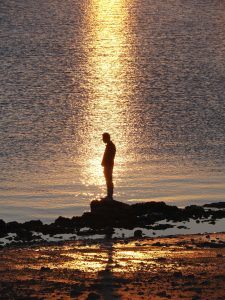
The art of looking closer

How we travel and choose to explore the world says a lot about who we are, but also about what we collectively seek in our time off. We believe that understanding the future of tourism starts with understanding people. What are they missing in everyday life? Which societal developments shape their expectations? And what do they increasingly seek when they step away from their routines? Ultimately, people travel to fulfil human needs: for rest, connection, discovery, personal growth or wonder. We’ve recently been working with several destinations, exploring the socio-cultural shifts that are reshaping the way people travel. Let’s explore some of our findings.

Perhaps one of the clearest examples of this changing mindset is the popularity of supermarket tourism. What is an ordinary weekly errand at home, becomes an exciting opportunity for discovery abroad. According to Skyscanner’s travel trends research, 69% of Dutch travellers always or often visit local supermarkets while travelling abroad.

Why? Because even something as simple as browsing supermarket shelves offers a glimpse into local life. Unfamiliar snacks, and colourful packaging etc.  reveal something about how people live. 

At the same time, travelling has never been easier to plan. Within seconds, AI can identify the best restaurants and suggest activities, while social media shows us exactly where to find the most photogenic viewpoints. Before we even arrive, we already know what to see and which experiences we supposedly shouldn’t miss. In fact, according to Booking.com’s 2025 Global AI Sentiment Report, 67% of respondents have already used AI in connection with a trip, while 62% have used it to plan or book travel.

Yet while technology promises to make discovery easier and more personalised, it may also be making our travel recommendations more similar. A 2026 study examining 420 AI-generated travel recommendations across ten AI systems found that recommendations repeatedly converged on a relatively narrow selection of well-known destinations, rather than consistently introducing travellers to unfamiliar places.

We are surrounded by a homogenised culture in which algorithms can flatten taste and discovery. This reflects a broader socio-cultural development. Everyday life is organised around efficiency and we want to do more in less time. Technology helps us with that.  But this mindset doesn’t stop when we go on holiday. In the process, we risk overlooking the very things that make travel meaningful: unexpected conversations, unfamiliar routines and small discoveries that cannot always be planned in advance.

This growing tension is visible in traveller behaviour. According to Accor and Globetrender’s Experiential Travel Trends 2026, 63.5% of travellers have deliberately avoided a destination, activity or restaurant because it felt too hyped or overexposed on social media.

The Tiny Tourist approach by It’s Nice That Insights challenges the tendency to make travel bigger and more spectacular. Instead, it invites us to pay attention to the smaller, often overlooked aspects of a destination. The local café where residents meet every morning. The family-run bakery. The changing landscape across the seasons. Instead of seeing more places, we start noticing more within a place. This connects to a growing desire for slow living: There is a growing desire to experience how people actually live in a place and how that way of life differs from your own, with travellers looking beyond the hotel for cultural enrichment and connections with local traditions. Slow living is also about experiencing a place more deeply. 

“What we do with our attention, in short, is at the heart of what makes us human.” – Rob Walker, The Art of Noticing (2019)

In The Art of Noticing, Walker proposes 131 exercises designed to help people rediscover things they normally overlook. His work reminds us that discovery doesn’t always require extraordinary experiences, it simply requires us to pay closer attention.

There is a growing appreciation for the everyday cultures and traditions that make places distinctive. And perhaps that’s where an opportunity lies for destinations: making the richness of everyday local life more accessible. Perhaps the future of travel is about learning to look closer.

Picture of Author

Author

Meera Radhoe

Share the signal.
More Signals

The financial reality of Gen Z

New research suggests younger generations are financially better off than generations before them. But purchasing power doesn’t tell the whole story. What does this

The art of looking closer

How we travel and choose to explore the world says a lot about who we are, but also about what we collectively seek in

The value of human-made

Together with BrandTrust, we recently worked on the positioning of a fine jeweller based in Vienna. As part of the project, we explored the

Tabea Höllger

Partner

Tabea Höllger specializes in brand positioning in saturated markets and measuring brand success. One of her key areas of expertise is the FMCG sector, where she focuses on topics such as product launches and the impact of packaging.

Tabea sees herself as a bridge-builder at the intersection of the FMCG market, sustainable brand management, and emerging technologies. She firmly believes that knowledge transfer between these three perspectives is essential for successfully addressing the challenges of the future.

In addition, Tabea has established herself over many years as an expert in creating engaging and memorable brand experiences. She helps companies inspire their employees to embrace and champion the brand strategy.

After gaining experience in market and advertising research and spending time abroad in the United States and the Philippines, the trained business psychologist returned to BrandTrust in 2016.

Kees Elands

Founder & Strategist

Kees his purpose is to help ambitious leaders and brands to human-proof their business. In 2003 he founded TrendsActive, a trend consultancy enabling brands to become more human centric.

Kees consults global brands like

  • Disney
  • The Coca-Cola Company
  • Asics
  • Discovery Channel
  • Swiss Life
  • Vodafone

and many more.

Next to being the founder of TrendsActive, he is also initiator of the first academic trend master for executives at the University of Utrecht and is initiator of various trend studies and white papers on subjects like trust, meaning, visual culture & generations.

Complex Society (EN)

TrendsActive X Telecom Gen Z (Full report)

TrendsActive X Telecom Gen Z (Teaser)

Four rules – How to better resonate with Gen Z

Complex society report

Stay relevant.
Sign up for our
bi-weekly Signals.

A bi-weekly newsletter in which we keep track of what’s going on in the world and translate based on our sociocultural knowledge, what this means to brands.

Kim Pillen

Consultant

Before Kim Pillen started as a trend consultant at TrendsActive, she worked for four years as a creative strategist at Dept. For brands such as Philips, bol.com, Beiersdorf, JBL, and the Consumers’ Association, she built (online) campaign, brand, and social media strategies. After four years, she decided that she wanted to better understand people and society in order to advise brands more effectively. That’s how she ended up at TrendsActive. Here, she can do what she loves most: digging into people’s needs and then working with brands to see how and where they can be relevant and meaningful.

Douwe Knijff

Researcher

Douwe is fascinated by how people work. With a background in Interdisciplinary Social Sciences (Bachelor) and Psychology (Master) and an analytical mind he tries figure out how societal shifts manifest themselves through social culture and human behaviour.

Aljan De Boer

Keynote speaker

Aljan has been widely recognized as an inspiring professional speaker on the critical trends that will shape society in the decades to come. He works as the Head of Inspiration at TrendsActive, a trend consultancy from the Netherlands using social science to human-proof business decision for brands like

  • Disney
  • Vodafone
  • Hugo Boss
  • ASR
  • Rabobank

Next to his role at TrendsActive he is the Community Director at the Institute for Real Growth where he inspires and connects a global community of +400 CMOs.  

He has been on the board of the Dutch Platform of Innovative Marketing for almost a decade. Regular speaker and moderator for the Dutch Marketing Awards and 3 times winner of the best of MIE. 

Kees Elands

Founder & Strategist

Kees his purpose is to help ambitious leaders and brands to human-proof their business. In 2003 he founded TrendsActive, a trend consultancy enabling brands to become more human centric.

Kees consults global brands like

  • Disney
  • The Coca-Cola Company
  • Asics
  • Discovery Channel
  • Swiss Life
  • Vodafone

and many more.

Next to being the founder of TrendsActive, he is also initiator of the first academic trend master for executives at the University of Utrecht and is initiator of various trend studies and white papers on subjects like trust, meaning, visual culture & generations.

Trendsactive_blau

Kees Elands

Founder & Strategist

Kees Elands

Founder & Strategist