Making the participant perspective a strategic compass
“How do we bridge the technical reality of pensions with the human reality of the people they exist to serve?”
Pensions are extraordinarily important to people's lives — and extraordinarily easy to approach as a technical problem.
The pension system has traditionally been shaped by actuarial models, regulation, legal expertise and financial calculations. All are essential. But people themselves don't experience pensions as spreadsheets. They experience uncertainty, expectations about the future, changing careers, families, identities and lives.
Against the backdrop of major changes to the Dutch pension system and wider societal shifts, PGGM wanted to ensure that the participant perspective became a structural part of strategic decision-making.
The ambition was not merely to ask participants what they thought about individual decisions. It was to understand the changing world in which those decisions would land.
How do we bridge the technical reality of pensions with the human reality of the people they exist to serve?
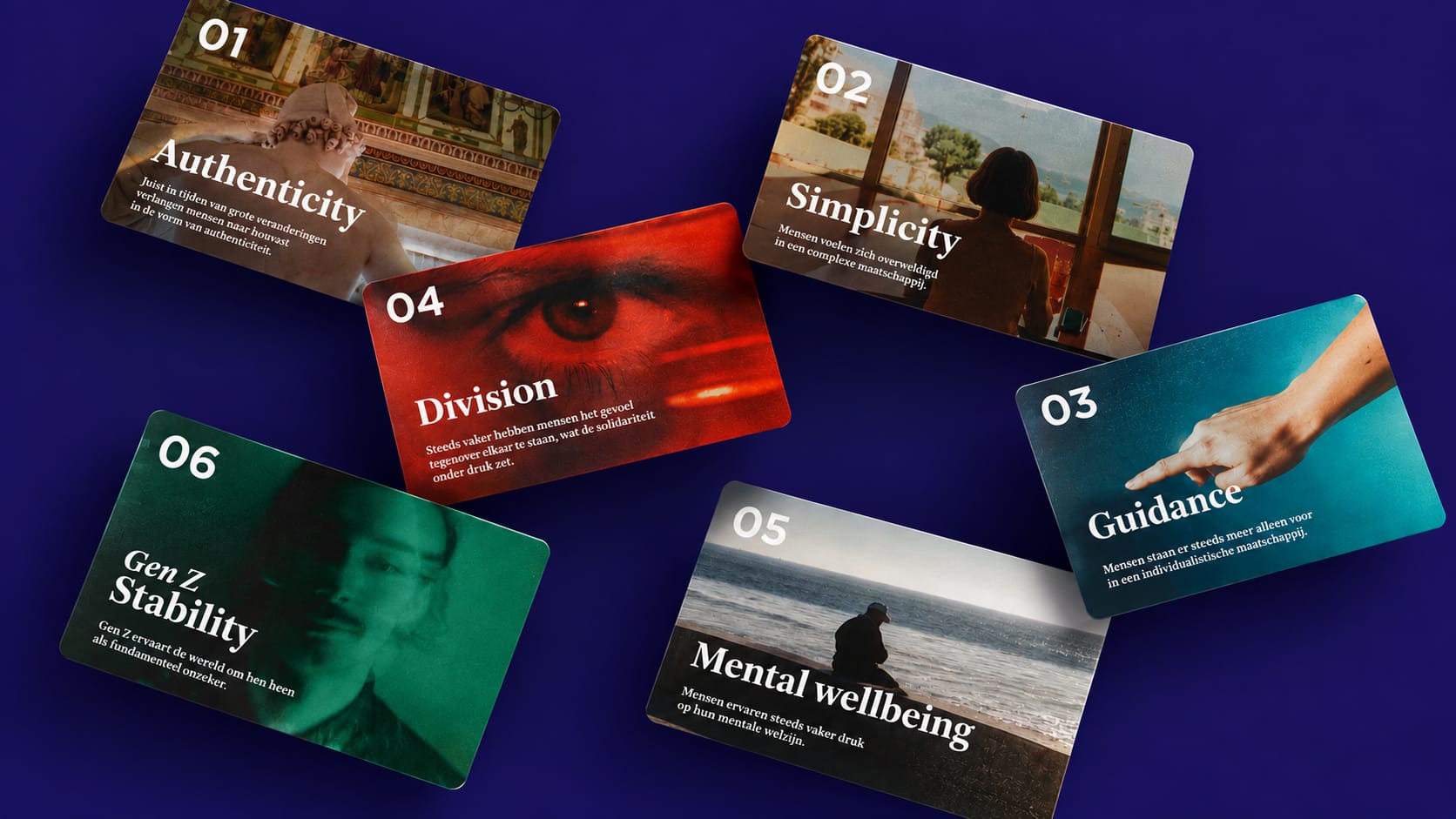
We used TrendsActive's Human Context Circle to identify the societal, generational and cultural developments most relevant to participants.
Rather than replacing existing participant research, we enriched and contextualized it. Existing PGGM insights were connected to broader human trends to create a deeper picture of what is changing in people's lives and what that could mean for pension decisions.
But insight alone wasn't enough.
Together with the Centre of Expertise and a cross-functional leading coalition, we translated the Human Context into an actionable participant perspective.
The work developed through four stages: building and enriching the Human Context; training the CoE to become internal knowledge leaders; translating the insights into Guiding Principles and practical checklists; and supporting teams as they began applying the perspective to real strategic questions.
The logic behind the Guiding Principles was deliberately simple:
If this is changing in people's lives, then this is what we should take into account when making decisions.
The shift was not from rationality to emotion.
It was from rationality alone to a richer understanding of human reality.
Actuarial, legal and financial expertise remain essential. But people are not purely rational actors, and an organization designed entirely around rational systems risks overlooking how decisions will actually be experienced.
The participant perspective therefore became an additional strategic lens: a way to bring human needs, emotions and changing social realities into conversations traditionally dominated by systems, numbers and technical expertise.
The result is a participant perspective designed to function as a strategic compass that PGGM and PMT can use for years rather than for a single decision.
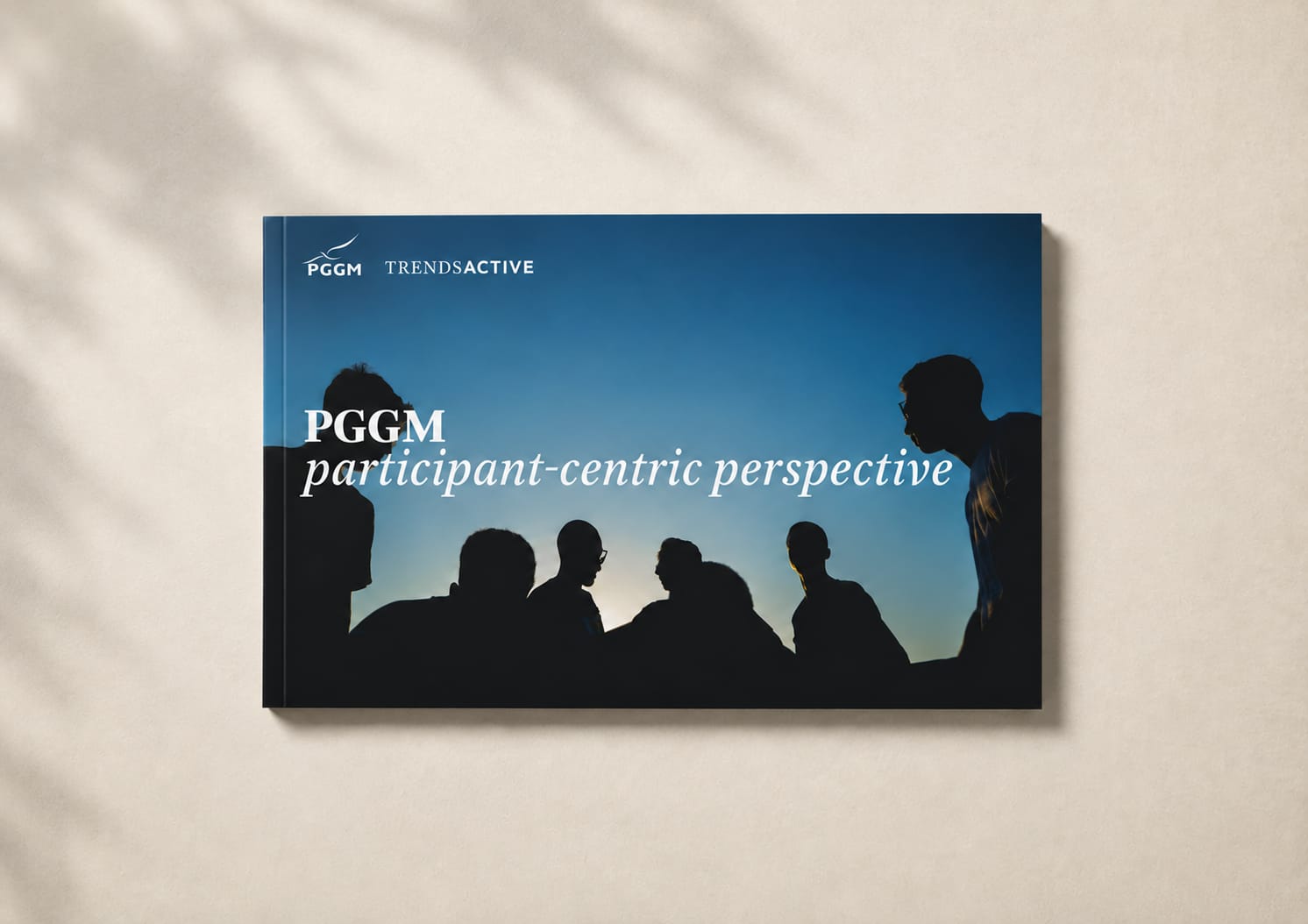
It combines 10–12 Human Context insights with existing research, short presentation materials, Guiding Principles and practical checklists.
More importantly, the knowledge isn't intended to remain in a report.
The CoE is being equipped as an internal knowledge leader, while linking pins and a broader coalition help carry the perspective into different parts of the organization. Workshops and practical application turn the framework from research into organizational capability.
The result is a stronger shared language for discussing not only what is technically optimal, but also what makes sense in the lives of participants.
Human-centricity becomes strategically powerful when it moves beyond customer research.
The goal isn't to put “the human” next to the system.
It is to make the human perspective part of how the system makes decisions.