Skip to content

The potential of hope

“Uncertainty” has become the dominant word in business. In recent earnings calls, 76% of S&P 500 companies cited it — up from 37% just three months earlier (HBR, FactSet, 2025).

The world has always been uncertain, you might say, but never at this scale. Political shifts, economic instability and social fragmentation are all unfolding at once, creating a constant sense that the ground is moving. Last year was the warmest on record. There is a mental health crisis. Social cohesion is weakening. The situation in middle-east. A lot to be pessimistic about. 

I’ve read enough of Steven Pinker and Hans Rosling to counter pessimism with optimism: we are living in one of the most prosperous periods in history. I live in one of the richest and happiest countries in the world, so there’s also much to be optimistic about.

There’s something I keep running into: when I’m pessimistic, no one listens, and when I’m optimistic, they don’t believe me. So either way, nothing ever moves.

So the question becomes: how do you deal with uncertainty?

What resonates more is hope. Not as some dreamy term, but as recognising that things are not going well while also acknowledging that people are working to improve them, creating room to act. Hope is not just a feeling. It has been studied in psychology and behavioral science as a cognitive framework that helps people navigate uncertainty and take action.

Emily Esfahani Smith, writer and researcher on meaning and wellbeing,  points to the personal benefits of that mindset: people who are hopeful tend to cope better with stress, think more creatively in difficult situations, and move through challenges with greater resilience.

Some things that give me hope:

While polarization poses a challenge, research from several countries consistently shows we’re not nearly as polarized on important issues as people think (as we explored in our piece on perceived division).

74% of people across G20 countries support shifting towards economic systems focused on wellbeing. (Earth4All, 2021)

Investments in green energy are now 2x those of fossil fuels, and the progress is consistently underestimated. (International Energy Agency, 2024)

So how can you as a brand tap into it? According to research on hope and behaviour, particularly goal-setting theory (C. R. Snyder) and the progress principle (Teresa Amabile), hope works when it’s made tangible:

Here are four recommendations:

1.Be specific about the future by defining a clear, near-term outcome (e.g. what improves for them, their home, their work), rather than broad promises like “a better tomorrow.”

2.Celebrate small wins by highlighting visible proof that change is already happening (customer adoption, product impact, behavioural shifts), not just long-term ambition.

3.Acknowledge what’s hard and be explicit about real constraints in people’s lives (cost, time, effort, trade-offs), rather than presenting solutions as effortless.

4.Tie it to identity and frame actions in terms of who people are or want to be (responsible consumers, smart decision-makers, people who care about others), not just what they get.

Stay hopeful!
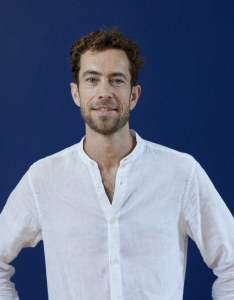
Picture of Author

Author

Aljan de Boer

Share the signal.

More Signals

The value of human-made

Together with BrandTrust, we recently worked on the positioning of a fine jeweller based in Vienna. As part of the project, we explored the

The age of magical thinking

For decades, organisations assumed that more information would lead to better decisions and stronger consumer trust. But people don’t just seek facts or a

Baby Boomers booming industry

Why do so many companies overlook one of the largest and wealthiest consumer groups? Perhaps because the people making the decisions still hold the

Tabea Höllger

Partner

Tabea Höllger specializes in brand positioning in saturated markets and measuring brand success. One of her key areas of expertise is the FMCG sector, where she focuses on topics such as product launches and the impact of packaging.

Tabea sees herself as a bridge-builder at the intersection of the FMCG market, sustainable brand management, and emerging technologies. She firmly believes that knowledge transfer between these three perspectives is essential for successfully addressing the challenges of the future.

In addition, Tabea has established herself over many years as an expert in creating engaging and memorable brand experiences. She helps companies inspire their employees to embrace and champion the brand strategy.

After gaining experience in market and advertising research and spending time abroad in the United States and the Philippines, the trained business psychologist returned to BrandTrust in 2016.

Kees Elands

Founder & Strategist

Kees his purpose is to help ambitious leaders and brands to human-proof their business. In 2003 he founded TrendsActive, a trend consultancy enabling brands to become more human centric.

Kees consults global brands like

  • Disney
  • The Coca-Cola Company
  • Asics
  • Discovery Channel
  • Swiss Life
  • Vodafone

and many more.

Next to being the founder of TrendsActive, he is also initiator of the first academic trend master for executives at the University of Utrecht and is initiator of various trend studies and white papers on subjects like trust, meaning, visual culture & generations.

Complex Society (EN)

TrendsActive X Telecom Gen Z (Full report)

TrendsActive X Telecom Gen Z (Teaser)

Four rules – How to better resonate with Gen Z

Complex society report

Stay relevant.
Sign up for our
bi-weekly Signals.

A bi-weekly newsletter in which we keep track of what’s going on in the world and translate based on our sociocultural knowledge, what this means to brands.

Kim Pillen

Consultant

Before Kim Pillen started as a trend consultant at TrendsActive, she worked for four years as a creative strategist at Dept. For brands such as Philips, bol.com, Beiersdorf, JBL, and the Consumers’ Association, she built (online) campaign, brand, and social media strategies. After four years, she decided that she wanted to better understand people and society in order to advise brands more effectively. That’s how she ended up at TrendsActive. Here, she can do what she loves most: digging into people’s needs and then working with brands to see how and where they can be relevant and meaningful.

Douwe Knijff

Researcher

Douwe is fascinated by how people work. With a background in Interdisciplinary Social Sciences (Bachelor) and Psychology (Master) and an analytical mind he tries figure out how societal shifts manifest themselves through social culture and human behaviour.

Aljan De Boer

Keynote speaker

Aljan has been widely recognized as an inspiring professional speaker on the critical trends that will shape society in the decades to come. He works as the Head of Inspiration at TrendsActive, a trend consultancy from the Netherlands using social science to human-proof business decision for brands like

  • Disney
  • Vodafone
  • Hugo Boss
  • ASR
  • Rabobank

Next to his role at TrendsActive he is the Community Director at the Institute for Real Growth where he inspires and connects a global community of +400 CMOs.  

He has been on the board of the Dutch Platform of Innovative Marketing for almost a decade. Regular speaker and moderator for the Dutch Marketing Awards and 3 times winner of the best of MIE. 

Kees Elands

Founder & Strategist

Kees his purpose is to help ambitious leaders and brands to human-proof their business. In 2003 he founded TrendsActive, a trend consultancy enabling brands to become more human centric.

Kees consults global brands like

  • Disney
  • The Coca-Cola Company
  • Asics
  • Discovery Channel
  • Swiss Life
  • Vodafone

and many more.

Next to being the founder of TrendsActive, he is also initiator of the first academic trend master for executives at the University of Utrecht and is initiator of various trend studies and white papers on subjects like trust, meaning, visual culture & generations.

Trendsactive_blau

Kees Elands

Founder & Strategist

Kees Elands

Founder & Strategist