
You and me don’t travel the same
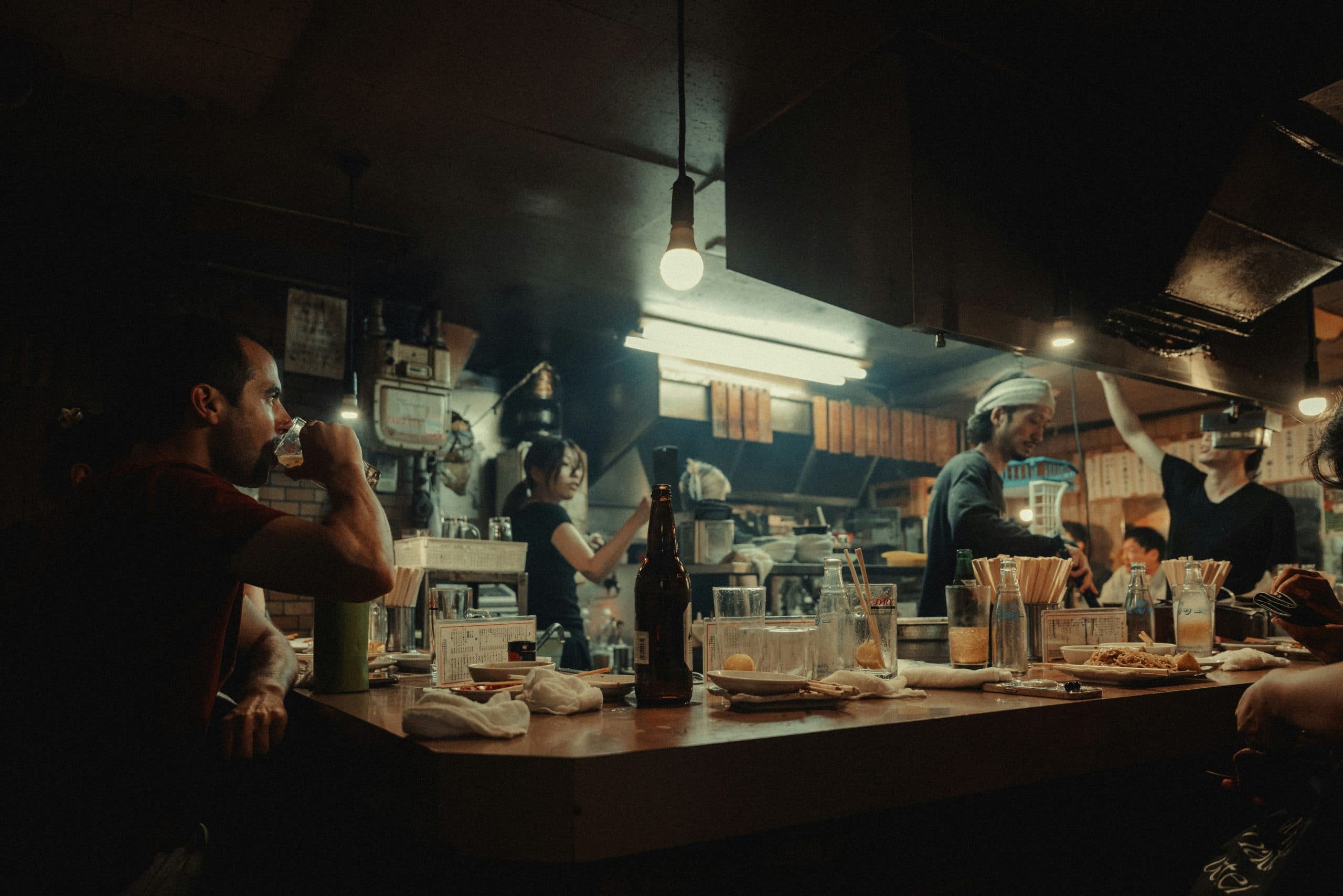
We’ve entered the season when the secondary tab in our web browser is consistently occupied by a booking site or an airline page. But what sits in your tab and mine is rarely the same.
One trend report crowns this the year of the coolcation, another the year of the microcation. But no single label can cover how differently we travel. There is no universal global traveller: where you come from shapes where you go, and how. And what you and I want out of the same trip can be two completely different things.
Where you’re from shapes how you travel
- Europe is staying put. Europeans are keeping close to home, partly for budget reasons and partly because the world feels less settled: 92% now name geopolitical tension as a real travel concern. The result is a staycation surge — one in five French holidaymakers plan to go no further than the South of France. The UK’s keenest travellers, meanwhile, are baby boomers, whose format of choice is the cruise — passenger numbers climbed 7% in 2025, to a record 2.54 million. And southern heatwaves are nudging everyone else north: bookings to Norway and Iceland have jumped more than 120%.
- The United States is shortening the trip. Even high-earning Americans are now watching the wallet — hence the rise of the “microcation”, a getaway of four nights or fewer. A quarter of Gen Z and Millennials are planning trips that last barely a day. Gen Z is the country’s most active travelling group, choosing frequent, intense, experience-packed hops over prolonged trips. The prevalence of GLP-1 weight-loss drugs is changing travel too: as users feel fitter, they are swapping food-and-sunlounger holidays for more active ones.
- The Middle East leaves nobody at home. No region travels more often: 84% of Middle Eastern travellers plan seven separate trips this year, while most of the world manages one or two. Gulf travellers are swapping luxury goods for exclusive travel experiences — here, the holiday itself is the status symbol. And they rarely go alone: multigenerational trips are booming.
- Asia lets AI do the planning. The region is the largest slice of the world’s travellers, and the most digitally fluent. 64% of Asia-Pacific travellers now use AI to plan and book a trip — well ahead of Europe or the Americas. Chinese travellers are also abandoning the group tour: independent, self-guided travel is set to make up half the country’s outbound market, with Japan and Vietnam as the top destinations.
- Latin America explores its own backyard. While the rest of the world books Mexico for the 2026 World Cup, Latin Americans themselves are staying on the continent: affordability makes intra-regional trips — between Brazil and Argentina especially — the dominant pattern. They are also the most payment-flexible travellers anywhere, booking in instalments and mostly from a phone.
Why you go shapes the trip even more
- Travelling for the story. Self-narrative identity theory (McAdams, 2001) shows that people actively construct a “life story” about themselves — to make sense of who they are and who they want to become, and how they want to appear to others. Major experiences become the “chapters”, and travel is one of the most reliable sources of new chapter material: a night hike by head-torch, swimming with whale sharks, a night in an ice igloo. Bonus points if it photographs well — a moment that can be posted is a story that travels further. This is performative travel: more than 60% of Millennials and Gen Z say a trip’s shareability — how well it can be retold to others — shapes where they go (Hilton, 2024).
- Travelling to grow. People now book trips not to relax but to grow: to learn a skill, test a limit, work through a life transition. The solo-travel market is climbing towards $1.07 trillion by 2030. The “runcation“, a trip built around a destination marathon or trail race, is everywhere — the London Marathon just drew a record number of applications. And Hyrox, the gym-floor fitness race, expects 1.5 million competitors in 2026.
- Travelling to feel like yourself. Telling a real mom-and-pop eatery from a tourist trap is easy — we are wired to avoid staged authenticity (MacCannell, 1973). But it goes further: we are drawn to places that make us feel more like our true selves, somewhere to unplug from the constant self-curation the digital world demands (Wang, 1999).
- Travelling to break the routine. When did you last do something for the first time? Psychologists describe boredom as useful — it flags when a routine has stopped meaning anything and it is time to change something (Elpidorou, 2018). And doing something for the first time never feels easier than in a place that’s new to you.
Still, few of us travel on a single motive. Most trips are a cocktail of them — a pinch of boredom, a dose of achievement-seeking, a handful of stories to bring home.
The lesson stretches well past travel. No market is one smooth, uniform mass: slice it by region and the differences surface; slice it by motive and they multiply. So the real work is to stop selling to a crowd and start packing for a person.
Originally published on trendsactive.com
Keep reading

The most differentiating asset many brands overlook
Go to a language model, Claude, Gemini, ChatGPT, or any other, start a new conversation and ask this question: Give me a number between 1 and 10. What did you get? A seven? The first time I heard about this experiment was during the keynote of Zoe Scaman…

The age of magical thinking
For decades, organisations assumed that more information would lead to better decisions and stronger consumer trust. But people don’t just seek facts or a good product, they seek meaning. The brands, communities and institutions that resonate today help…

Baby Boomers booming industry
Why do so many companies overlook one of the largest and wealthiest consumer groups? Perhaps because the people making the decisions still hold the wrong assumptions. Last Week at Telecom Insights 2026, hosted by Telecompaper, we challenged some of those…