
All I want for Christmas is a dinner invitation
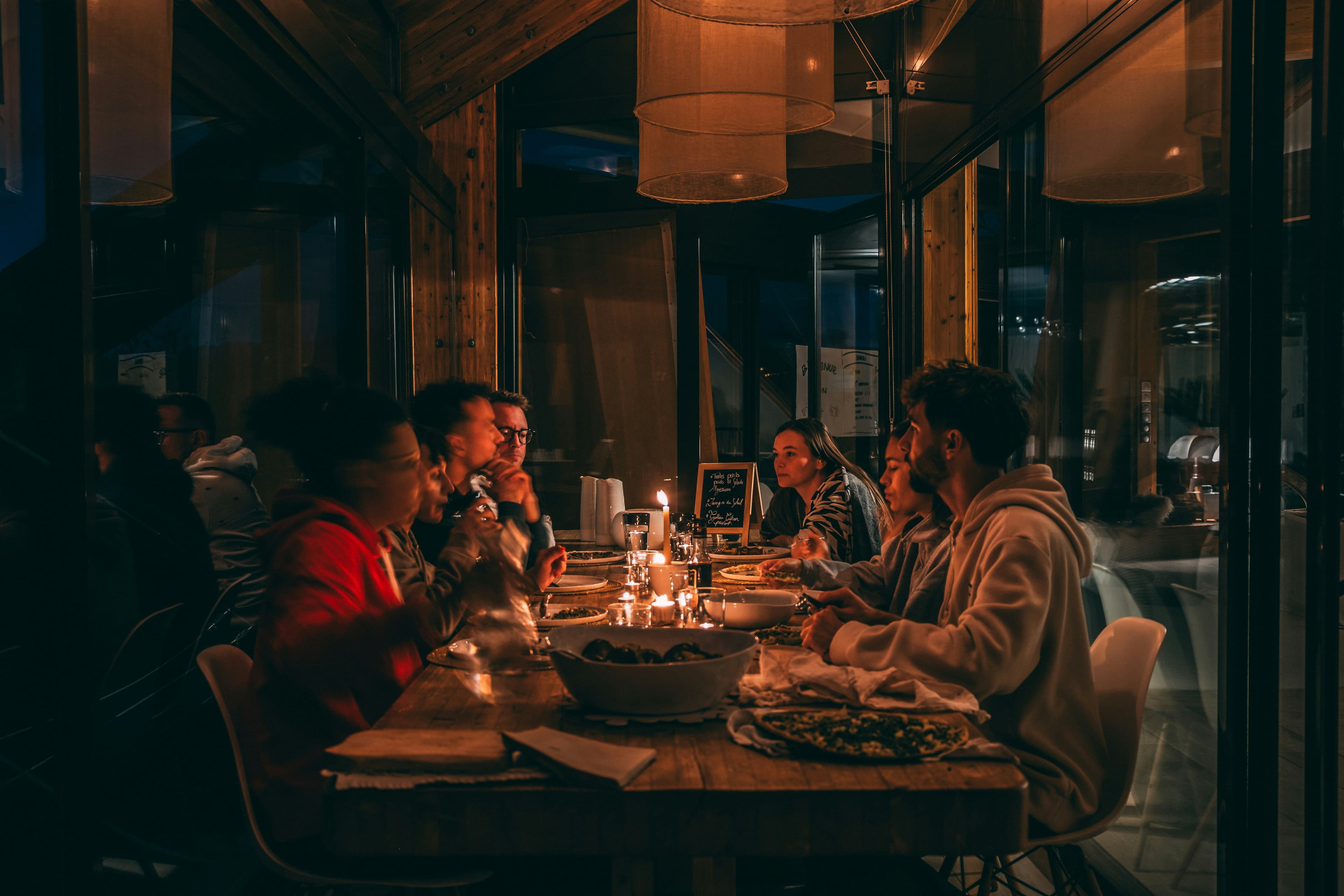
It's that time of year again. We're looking up festive recipes, scrolling through beautifully decorated dinner tables and figuring out how to get everyone together for Christmas. But outside the festive season, how often do we actually invite people into our homes?
In 1975, 42% of Americans hosted friends or family at least once a month. In 2026, that figure dropped to just 12%. A decline of more than 70%, according to data explored by Derek Thompson in his recent piece You Are No Longer Invited to Dinner. Back in 2000, sociologist Robert Putnam warned in his book Bowling Alone that the tradition of visiting friends was at risk of disappearing within a generation. More than 25 years later, his concerns seem justified.
Interestingly, our appetite for dinner party inspiration hasn't disappeared. Pinterest's 2025 trend report recorded a 55% increase in searches for dinner party tablescapes. Apparently, we still like the idea of hosting but we are just doing less of it.
So, what happened?
1. Leisure has become another thing to optimise
In 1970, Swedish economist Staffan Burenstam Linder introduced the concept of the ‘harried leisure class’. His theory was that as societies become wealthier, we become more conscious of the value of our time and even our leisure needs to feel like a time well spent.
Sound familiar? Listening to a podcast while cooking, answering emails while watching Netflix, squeezing in a workout between appointments. We have become very good at combining activities.
A dinner party, however, is difficult to optimise. It takes an entire evening, has no predictable outcome and might involve spending an hour discussing someone's recent kitchen renovation.
It also creates room for the kind of unstructured conversations that friendships are built on.
2. Who has time to be the host?
Hosting involves a surprising amount of invisible labour: coordinating schedules, cooking, remembering dietary requirements and cleaning up afterwards. Historically, much of this work fell to women. We shouldn't romanticise an era when frequent social gatherings depended heavily on women's unpaid domestic labour.
But meanwhile, expectations around parenting have intensified. A 2004 study found that both mothers and fathers were spending more time actively caring for their children in the late 1990s than in the mid-1960s. Family life has become more demanding in some respects. And when evenings are filled with swimming lessons and bedtime routines, maintaining adult friendships can easily slip down the list.
3. When did having people over become a performance?
Matching ceramics, handwritten menus, and a signature cocktail. Somewhere along the way, having friends over for dinner became an aesthetic category of its own. Christmas amplifies this particularly well. A 2023 American Psychological Association survey found that 36% of American adults felt the holidays had become a competition. Yet 84% also said the festive season creates a sense of togetherness. We want the intimacy of gathering, but we can also feel overwhelmed by the expectations surrounding it.
Psychologists call our tendency to overestimate how much others notice us the spotlight effect. We might worry about the size of our apartment or if the food is good enough, but our guests give these things far less thought than we do. In fact, research published in the Journal of Personality and Social Psychology found that people consistently underestimate how much others appreciate even already being contacted for a dinner. Perhaps it's time to lower the bar. Ignore Kylie Jenner's Christmas decorations. Takeout counts and mismatched glasses absolutely count.
4. It has become too enjoyable to be home alone
We have never had so many ways to entertain ourselves without involving another person. The consequences extend beyond hosting. Convenience has given us more independence over how we spend our time. But it has also removed many of the everyday reasons we once needed each other. We can genuinely value our friendships and still find ourselves spending little time with our friends.
An invitation
Christmas is one of the few occasions when we collectively agree to set aside time for a shared meal. We travel, rearrange schedules and spend hours preparing food that will be eaten in considerably less time. In his 2017 study Breaking Bread: The Functions of Social Eating, Oxford researcher Robin Dunbar found that people who regularly eat with others report greater happiness, stronger support networks and a deeper connection to their communities. Sharing food is one of our oldest mechanisms for building and maintaining social bonds.
Every December, supermarkets, food brands and homeware retailers sell us an image of togetherness. Often, that image comes with an immaculate home, an elaborate menu and a perfectly coordinated table.
But in a culture where socialising already requires considerable effort, brands might be more valuable when they make gathering easier. Affordable meals designed for sharing, recipes that guests can prepare together, practical solutions for small living spaces and campaigns that celebrate the reality of having people over.
What can brands do to make everyday hosting more accessible?
Keep reading

The most differentiating asset many brands overlook
Go to a language model, Claude, Gemini, ChatGPT, or any other, start a new conversation and ask this question: Give me a number between 1 and 10. What did you get? A seven? The first time I heard about this experiment was during the keynote of Zoe Scaman…

The age of magical thinking
For decades, organisations assumed that more information would lead to better decisions and stronger consumer trust. But people don’t just seek facts or a good product, they seek meaning. The brands, communities and institutions that resonate today help…

Baby Boomers booming industry
Why do so many companies overlook one of the largest and wealthiest consumer groups? Perhaps because the people making the decisions still hold the wrong assumptions. Last Week at Telecom Insights 2026, hosted by Telecompaper, we challenged some of those…